
Cracks That Change
Cracks in walls or around openings—especially cracks that widen, spread, or return after a cosmetic repair.
Underpinning · South Florida
When a foundation needs additional support, the right approach depends on the structure and the conditions beneath it. SCFS evaluates the property, explains the options clearly, and performs the work with experienced in-house crews.
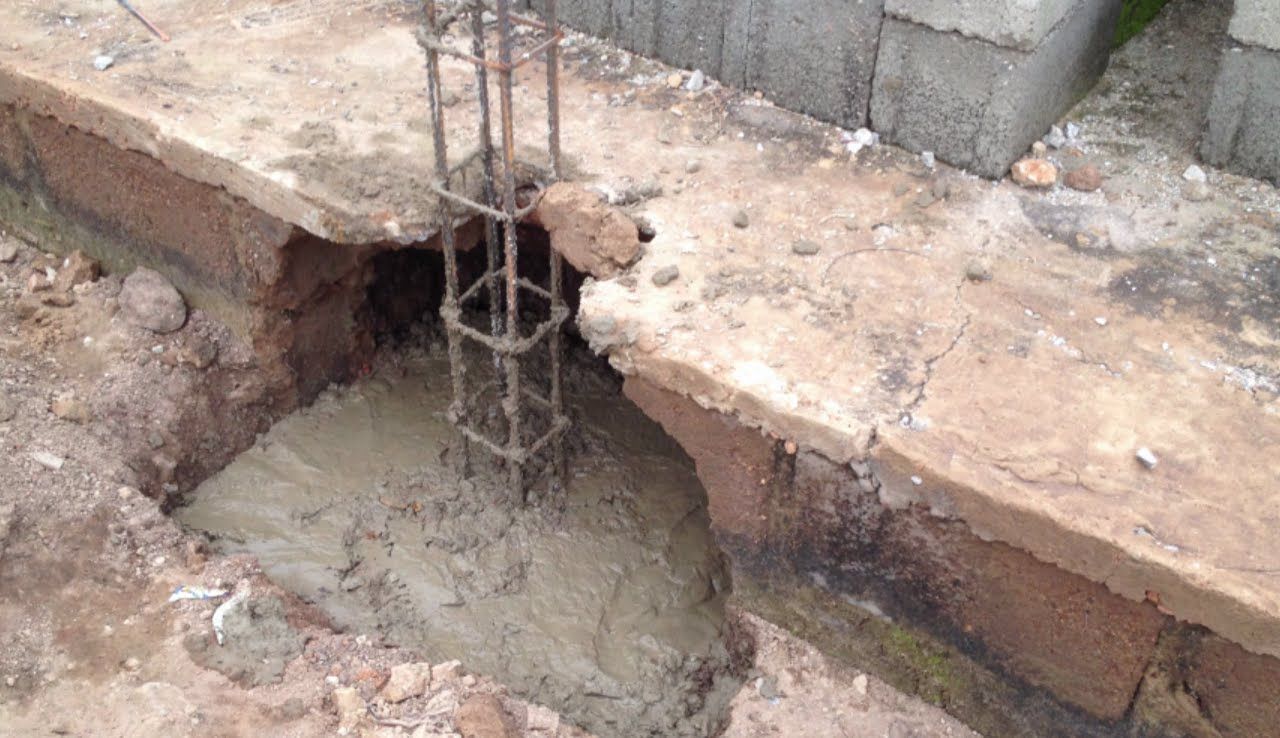
Why foundations move
Soils can shift over time, moisture levels change with the seasons, fill material can settle, and older structures live through decades of conditions around them. The visible signs are the result—the cause is what an evaluation looks for.
The only way to know what is happening at a specific property is to evaluate it. Visible symptoms alone do not identify the appropriate solution.
Signs of possible settlement
These are common reasons property owners call us. They are observations, not a diagnosis—their pattern, location, and change over time are what an evaluation considers.
Cracks in walls or around openings—especially cracks that widen, spread, or return after a cosmetic repair.
Floors that feel uneven, dip, or slope noticeably from one area to another.
Doors and windows that stick, drag, or no longer close the way they used to.
Gaps that appear at trim, fascia, or where exterior elements meet the structure.
Any one of these can have more than one cause. An evaluation is how the pattern and its cause are considered together.
When it may be considered
Underpinning is not the answer to every foundation concern. It may be considered when the evaluation shows that an existing foundation needs additional support for the conditions present.
When an existing foundation needs additional support beneath it for the conditions found at the property.
When observations suggest movement is ongoing rather than a single past event.
When a design professional or project team has identified foundation support as part of a larger project.
Qualified residential and commercial properties where the scope fits SCFS capabilities.
The right approach is determined per property. If underpinning is not the best fit, we will explain what is—the recommendation follows the condition, not the other way around.
Evaluation & repair planning
The exact path depends on the property and what is found. This is the practical framework our team follows so recommendations are based on the condition, not on assumptions.
Send photographs, the property address, and a short description of what you have noticed and when.
Our team reviews the information and asks focused questions about the structure and its history.
The condition is evaluated and the practical path forward is explained, including what the work would involve.
In-house crews perform the confirmed work and keep the property contact informed as the project moves.
Helpful to have ready: photographs of what you are seeing, the property address, and any previous inspection or repair information.
How underpinning works
Underpinning adds support beneath an existing foundation. A support element is installed at the foundation and connected to it, so load can be transferred to more stable material below.
A support element is installed at the existing foundation and connected to it.
The goal is to transfer load from the affected area to more stable material below.
Method, depth, and specifications are determined for each project—not assumed from visible symptoms.
Technical details are reviewed and confirmed for each property as part of the evaluation and project scope.
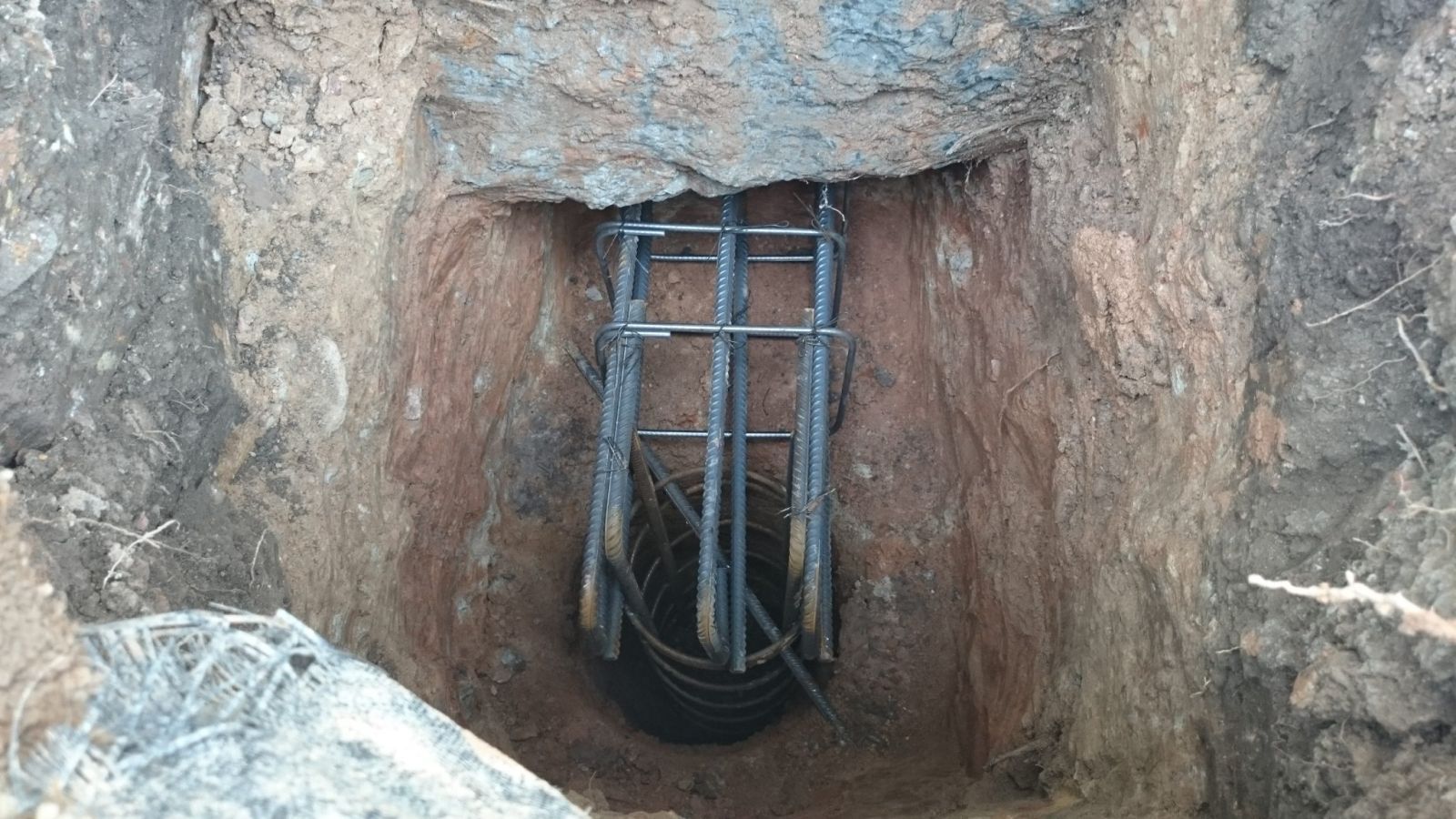
Real SCFS jobsites
These photographs and the site clip come from Southern Coast Foundation Systems project documentation. They show real conditions and crews—not a promise of identical results.
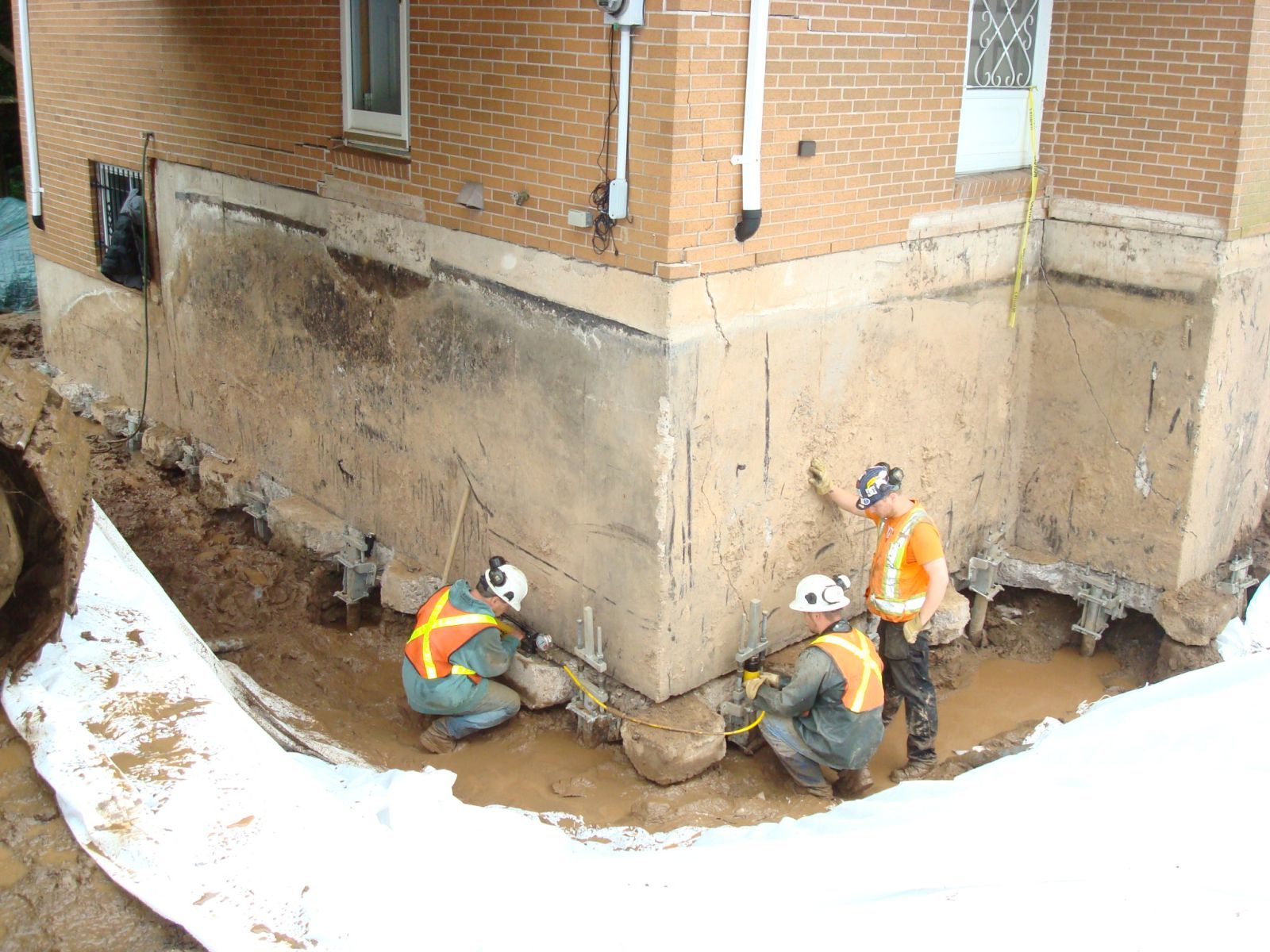
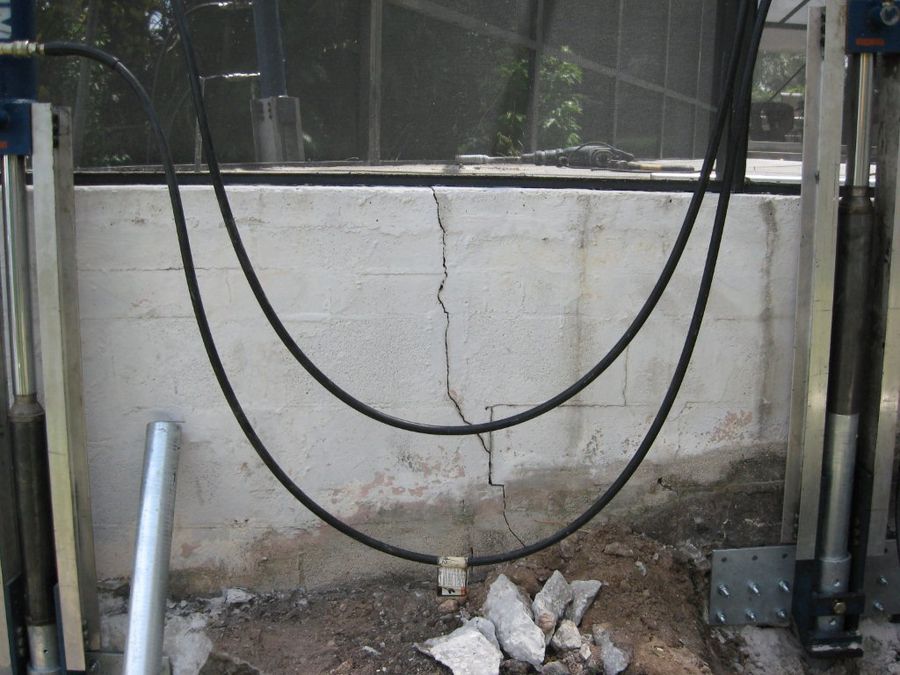
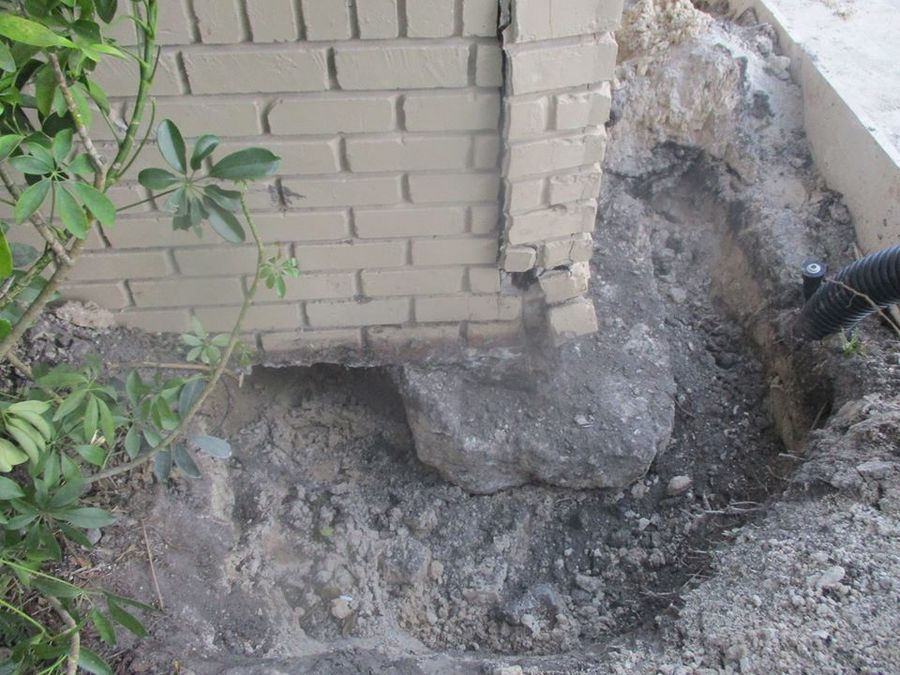
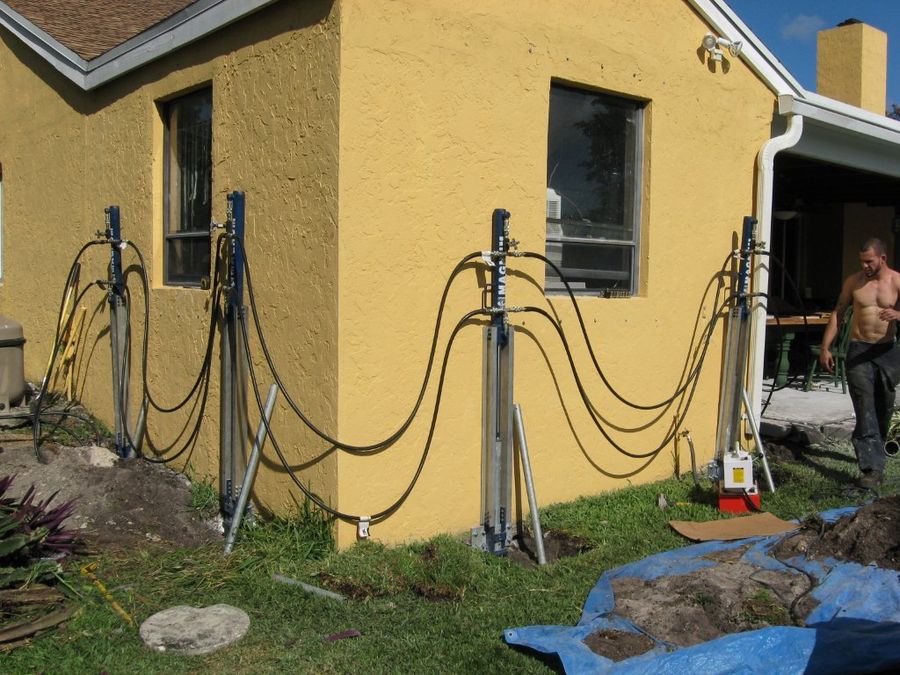
Every property, condition, repair scope, and outcome is different. A site-specific evaluation is required.
What SCFS explains to the customer
Foundation work should be easier to understand before any decision is made. Our team walks through what was observed, what it may mean, and what the practical options are.
The observations, their pattern, and the conditions around the structure.
The available paths and why one may fit the property better than another.
A practical explanation of the proposed scope before any decision is made.
A clear recommendation, with room for your questions—no pressure and no overselling.
Not sure what the movement means?
Send photographs and a short description of what you have noticed. Our team will review the information and explain the next step.